
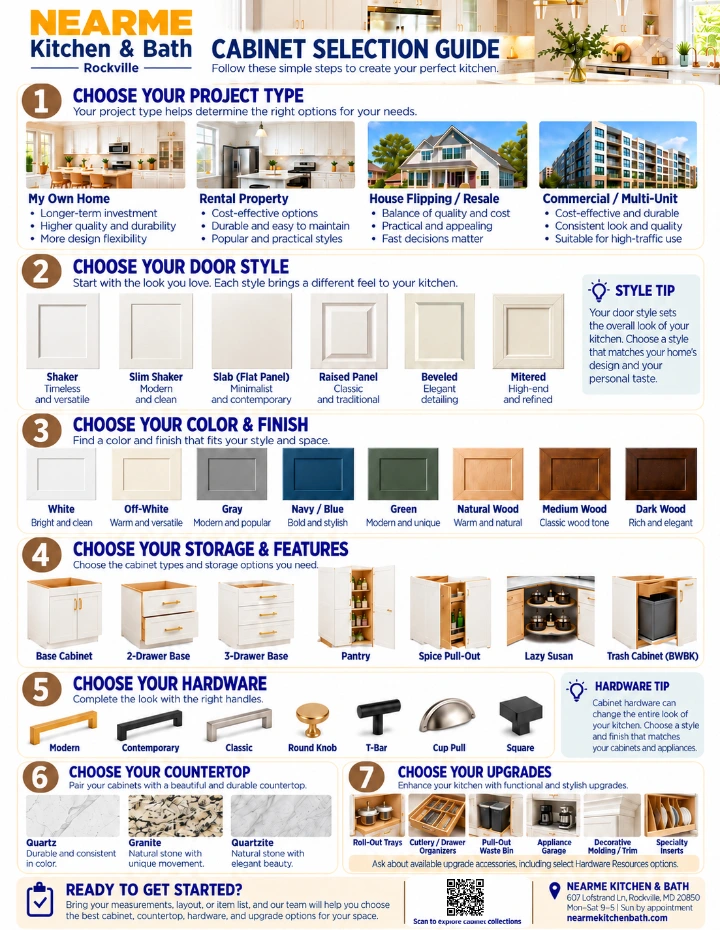
The Complete Kitchen Cabinet Buying Guide: 7 Steps to Choosing the Right Cabinets
Planning a kitchen remodel? Choosing cabinets involves more than selecting a color or door style. From cabinet construction and storage to hardware and countertops, each decision affects how your kitchen looks and functions.
Whether you're remodeling your own home, updating a rental property, renovating a house for resale, or planning a multi-unit project, this guide will help you understand the most important cabinet options before making your decision.
At NEARME Kitchen & Bath, we help homeowners, remodelers, and contractors explore cabinet solutions for projects throughout Rockville, Montgomery County, Washington DC, Northern Virginia, and surrounding areas.
Choose Your Project Type
Before choosing your cabinets, consider how the kitchen will be used. Different types of projects often require different priorities when it comes to appearance, durability, cost, and functionality.
My Own Home
For your primary residence, cabinets are a long-term investment. Consider durability, everyday convenience, storage needs, and design flexibility.
Rental Property
Rental kitchens often benefit from cost-effective cabinets that are durable, easy to maintain, and practical for everyday use.
House Flipping / Resale
For resale projects, focus on balancing quality and cost. Neutral colors, popular door styles, and practical layouts can appeal to a wide range of buyers.
Commercial / Multi-Unit
Apartments and multi-unit projects may prioritize consistent finishes, durability, cost efficiency, and products suitable for repeated use.
Establishing your project goals early can help narrow down your cabinet options and prevent unnecessary changes later in the process.
Choose Your Cabinet Door Style
Cabinet door style is one of the most noticeable elements of kitchen design. The shape of the door panels and frames can give your kitchen a classic, transitional, or contemporary appearance.
Here are six cabinet door styles commonly found in American kitchens.
Shaker Cabinets
Shaker doors feature a simple recessed center panel surrounded by a frame. Their timeless appearance makes them suitable for traditional, transitional, and modern kitchens.
Slim Shaker Cabinets
Slim Shaker doors use a narrower frame than traditional Shaker doors. The result is a cleaner, more contemporary appearance.
Slab / Flat Panel Cabinets
Slab doors feature a flat, uninterrupted surface without a traditional raised or recessed frame. They are popular in minimalist and modern kitchens.
Raised Panel Cabinets
Raised panel doors have a center panel that projects outward, creating depth and decorative detailing. They are often associated with traditional kitchen designs.
Beveled Cabinets
Beveled door styles incorporate angled edges or decorative profiles that add dimension and visual detail to the cabinetry.
Mitered Cabinets
Mitered cabinet doors typically feature frame pieces joined at angled corners, often with decorative detailing for a refined appearance.
Your cabinet door style sets the overall look of your kitchen. If you're unsure where to start, compare Shaker, Slim Shaker, and Slab doors to see how different frame designs change the appearance of the same kitchen.
Choose Your Cabinet Color & Finish
Cabinet color plays a major role in the atmosphere of your kitchen. Light colors can help create a bright, open appearance, while darker finishes can add contrast, warmth, and visual depth.
Some popular cabinet color families include:
Color samples shown are illustrative. Actual cabinet colors, wood grains, textures, and sheen may vary by manufacturer and product collection.
Painted Cabinets vs. Wood Finishes
Painted cabinets are often chosen for a smooth, consistent color, while wood finishes emphasize natural grain patterns and variations in the material.
You can also combine finishes. For example, white upper cabinets paired with natural wood lower cabinets can create a balanced two-tone kitchen.
Evaluate cabinet samples alongside your flooring, countertop, backsplash, and lighting. Colors may look different under warm artificial lighting and natural daylight.
Choose Your Cabinet Storage & Features
A well-designed kitchen should be functional as well as attractive. Choosing the right cabinet configurations can make everyday cooking, cleaning, and organizing easier.
Base Cabinet
Standard base cabinets provide essential storage beneath the countertop for cookware, dishes, and household items.
2-Drawer Base
Two-drawer base cabinets offer accessible storage for larger pots, pans, and kitchen equipment.
3-Drawer Base
Three-drawer cabinets help organize utensils, cookware, and kitchen accessories by size and purpose.
Pantry Cabinet
Tall pantry cabinets maximize vertical storage and can accommodate packaged foods, cookware, and small appliances.
Spice Pull-Out
Narrow pull-out storage makes use of limited spaces and helps keep spices and cooking essentials easy to access.
Lazy Susan
A rotating corner cabinet tray improves access to items stored inside certain corner cabinet configurations.
Trash Cabinet
Pull-out waste cabinets conceal trash and recycling containers inside the cabinetry for a cleaner appearance.
Why Cabinet Storage Planning Matters
The right storage configuration depends on your cooking habits, kitchen layout, and available cabinet space. A family that cooks frequently may prefer more drawers, while a smaller kitchen may benefit from tall storage and specialized pull-out accessories.
Before finalizing your cabinet layout, consider where you will store everyday dishes, pots and pans, utensils, cleaning products, and small appliances.
Choose Your Cabinet Hardware
Cabinet hardware is a small detail that can make a noticeable difference in the overall appearance of your kitchen.
Handles and knobs are available in a variety of shapes, sizes, and finishes to complement different cabinet styles.
Modern Pulls
Clean lines and simple profiles work well with modern and transitional cabinetry.
Contemporary Pulls
Streamlined designs help create a neat and updated kitchen appearance.
Classic Pulls
Traditional hardware profiles add familiar detailing to classic cabinetry.
Round Knobs
Compact and versatile, round knobs can complement a wide range of cabinet doors.
T-Bar Pulls
T-shaped bar handles provide a simple, contemporary appearance.
Cup Pulls
Cup-shaped pulls are commonly paired with traditional and farmhouse-inspired cabinets.
Square Knobs
Angular knobs can add geometric detail to modern cabinetry.
Popular Cabinet Hardware Finishes
Common hardware finishes include brushed nickel, satin nickel, matte black, brushed brass, and polished chrome. Each finish creates a different look when paired with cabinet colors.
Consider both appearance and comfort. The ideal handle should look good, feel comfortable to grip, and work with the proportions of your cabinet doors and drawers.
Choose Your Kitchen Countertop
Your countertop is one of the most visible surfaces in the kitchen. The right material can complement your cabinetry while meeting your everyday needs.
Three popular countertop options are Quartz, Granite, and Quartzite.
Quartz Countertops
Engineered quartz countertops combine mineral materials with resins and other components. They are available in many colors and patterns, including designs inspired by natural stone.
Key features: Consistent appearance, nonporous surfaces in many product lines, and generally straightforward daily maintenance.
Granite Countertops
Granite is a natural stone known for its distinctive mineral patterns and color variations. Each slab can have a unique appearance.
Key features: Natural stone character, varied patterns, and good durability with appropriate maintenance.
Quartzite Countertops
Quartzite is a natural metamorphic stone. Certain quartzite varieties feature dramatic veining and elegant natural patterns.
Key features: Natural beauty, distinctive slab patterns, and a wide range of visual characteristics.
Which Countertop Material Should You Choose?
Quartz can be a good option if you prefer a relatively consistent appearance and straightforward maintenance. Granite may appeal to homeowners who appreciate natural color variations. Quartzite can be attractive for those seeking distinctive natural stone patterns.
Heat resistance, stain resistance, sealing needs, and recommended care vary by specific product. Always review the manufacturer's care instructions before making your final selection.
Choose Your Kitchen Upgrades
Once you've selected your cabinet style and layout, you can explore additional accessories that improve organization, convenience, and everyday functionality.
Roll-Out Trays
Sliding trays make items stored deep inside cabinets easier to access.
Cutlery / Drawer Organizers
Drawer inserts help separate utensils, cutlery, and kitchen accessories.
Pull-Out Waste Bins
Concealed waste and recycling systems help keep the kitchen clean and organized.
Appliance Garage
Dedicated appliance storage can help keep coffee makers, toasters, and other small appliances off the countertop.
Decorative Molding / Trim
Decorative trim and molding can provide a more finished appearance and add detail to cabinet installations.
Specialty Inserts
Plate racks, tray dividers, and other specialized accessories can help customize cabinet storage.
Not every accessory is compatible with every cabinet. Available options depend on the manufacturer, cabinet dimensions, and product collection.
Choose upgrades based on how you actually use your kitchen. Useful storage solutions often provide more everyday value than accessories selected only for appearance.
Additional Things to Consider Before Ordering Kitchen Cabinets
1. Measure Your Kitchen Carefully
Accurate measurements are essential for proper cabinet planning. Consider wall lengths, ceiling height, windows, doorways, plumbing, electrical locations, and appliance dimensions.
2. Confirm Your Appliance Specifications
Refrigerators, ranges, dishwashers, and range hoods all affect cabinet placement. Refer to each appliance manufacturer's installation and clearance requirements.
3. Think About Your Kitchen Workflow
Plan convenient access between your refrigerator, sink, range, and food preparation areas. Adequate clearance around doors, drawers, and walkways is also important.
4. Review Cabinet Construction
Compare cabinet box materials, door construction, drawer systems, hinges, and available finishes. Cabinet specifications can vary significantly between collections and manufacturers.
5. Confirm Details Before Ordering
Review your cabinet layout, dimensions, door styles, finish selections, hinge directions, finished sides, fillers, panels, and accessories.
Taking time to verify these details can reduce mistakes and help ensure that the selected cabinets fit your kitchen design.
Frequently Asked Questions About Kitchen Cabinets
What is the most popular cabinet door style?
Shaker is one of the most commonly used cabinet door styles in American kitchens because its simple design works with many interior styles.
What is the difference between Shaker and Slim Shaker cabinets?
Traditional Shaker cabinets typically have wider door frames, while Slim Shaker cabinets feature narrower frames for a more streamlined appearance.
Should I choose cabinets or countertops first?
It helps to consider both during the kitchen design process. Cabinet colors, countertop patterns, flooring, and backsplash materials should work together visually.
Are drawers better than traditional base cabinets?
Drawers often provide easier access to stored items, while traditional base cabinets can accommodate different types of larger items. The best combination depends on your storage needs.
Which countertop is better: Quartz, Granite, or Quartzite?
Each has advantages. Quartz offers consistent design options and generally easy upkeep. Granite provides natural patterns, while Quartzite is valued for distinctive natural stone appearances. The right choice depends on your preferences and maintenance needs.
What should I prepare before requesting a cabinet quote?
Kitchen measurements, a floor plan, appliance dimensions, preferred cabinet styles, and an existing cabinet list can all help with the quoting process.
Final Thoughts: Choosing the Right Kitchen Cabinets
Choosing kitchen cabinets doesn't have to be complicated. By breaking the process into seven steps, you can make informed decisions about your project needs, cabinet door styles, colors, storage configurations, hardware, countertops, and optional upgrades.
The goal is to create a kitchen that looks the way you want while remaining practical for everyday use.
Whether you're planning a full kitchen remodel or comparing cabinet options for an upcoming project, taking time to understand these details can help you make better choices.
Ready to Explore Kitchen Cabinet Options?
NEARME Kitchen & Bath provides kitchen cabinet selections, design assistance, and product quoting support for homeowners and contractors.
Already have a kitchen layout or cabinet list? You can use your existing plans to begin discussing available options.
Explore Kitchen Cabinet CollectionsThe Complete Kitchen Cabinet Buying Guide: 7 Steps to Choosing the Right Cabinets
Planning a kitchen remodel? Choosing cabinets involves more than selecting a color or door style. From cabinet construction and storage to hardware and countertops, each decision affects how your kitchen looks and functions.
Whether you're remodeling your own home, updating a rental property, renovating a house for resale, or planning a multi-unit project, this guide will help you understand the most important cabinet options before making your decision.
At NEARME Kitchen & Bath, we help homeowners, remodelers, and contractors explore cabinet solutions for projects throughout Rockville, Montgomery County, Washington DC, Northern Virginia, and surrounding areas.
Choose Your Project Type
Before choosing your cabinets, consider how the kitchen will be used. Different types of projects often require different priorities when it comes to appearance, durability, cost, and functionality.
My Own Home
For your primary residence, cabinets are a long-term investment. Consider durability, everyday convenience, storage needs, and design flexibility.
Rental Property
Rental kitchens often benefit from cost-effective cabinets that are durable, easy to maintain, and practical for everyday use.
House Flipping / Resale
For resale projects, focus on balancing quality and cost. Neutral colors, popular door styles, and practical layouts can appeal to a wide range of buyers.
Commercial / Multi-Unit
Apartments and multi-unit projects may prioritize consistent finishes, durability, cost efficiency, and products suitable for repeated use.
Establishing your project goals early can help narrow down your cabinet options and prevent unnecessary changes later in the process.
Choose Your Cabinet Door Style
Cabinet door style is one of the most noticeable elements of kitchen design. The shape of the door panels and frames can give your kitchen a classic, transitional, or contemporary appearance.
Here are six cabinet door styles commonly found in American kitchens.
Shaker Cabinets
Shaker doors feature a simple recessed center panel surrounded by a frame. Their timeless appearance makes them suitable for traditional, transitional, and modern kitchens.
Slim Shaker Cabinets
Slim Shaker doors use a narrower frame than traditional Shaker doors. The result is a cleaner, more contemporary appearance.
Slab / Flat Panel Cabinets
Slab doors feature a flat, uninterrupted surface without a traditional raised or recessed frame. They are popular in minimalist and modern kitchens.
Raised Panel Cabinets
Raised panel doors have a center panel that projects outward, creating depth and decorative detailing. They are often associated with traditional kitchen designs.
Beveled Cabinets
Beveled door styles incorporate angled edges or decorative profiles that add dimension and visual detail to the cabinetry.
Mitered Cabinets
Mitered cabinet doors typically feature frame pieces joined at angled corners, often with decorative detailing for a refined appearance.
Your cabinet door style sets the overall look of your kitchen. If you're unsure where to start, compare Shaker, Slim Shaker, and Slab doors to see how different frame designs change the appearance of the same kitchen.
Choose Your Cabinet Color & Finish
Cabinet color plays a major role in the atmosphere of your kitchen. Light colors can help create a bright, open appearance, while darker finishes can add contrast, warmth, and visual depth.
Some popular cabinet color families include:
Color samples shown are illustrative. Actual cabinet colors, wood grains, textures, and sheen may vary by manufacturer and product collection.
Painted Cabinets vs. Wood Finishes
Painted cabinets are often chosen for a smooth, consistent color, while wood finishes emphasize natural grain patterns and variations in the material.
You can also combine finishes. For example, white upper cabinets paired with natural wood lower cabinets can create a balanced two-tone kitchen.
Evaluate cabinet samples alongside your flooring, countertop, backsplash, and lighting. Colors may look different under warm artificial lighting and natural daylight.
Choose Your Cabinet Storage & Features
A well-designed kitchen should be functional as well as attractive. Choosing the right cabinet configurations can make everyday cooking, cleaning, and organizing easier.
Base Cabinet
Standard base cabinets provide essential storage beneath the countertop for cookware, dishes, and household items.
2-Drawer Base
Two-drawer base cabinets offer accessible storage for larger pots, pans, and kitchen equipment.
3-Drawer Base
Three-drawer cabinets help organize utensils, cookware, and kitchen accessories by size and purpose.
Pantry Cabinet
Tall pantry cabinets maximize vertical storage and can accommodate packaged foods, cookware, and small appliances.
Spice Pull-Out
Narrow pull-out storage makes use of limited spaces and helps keep spices and cooking essentials easy to access.
Lazy Susan
A rotating corner cabinet tray improves access to items stored inside certain corner cabinet configurations.
Trash Cabinet
Pull-out waste cabinets conceal trash and recycling containers inside the cabinetry for a cleaner appearance.
Why Cabinet Storage Planning Matters
The right storage configuration depends on your cooking habits, kitchen layout, and available cabinet space. A family that cooks frequently may prefer more drawers, while a smaller kitchen may benefit from tall storage and specialized pull-out accessories.
Before finalizing your cabinet layout, consider where you will store everyday dishes, pots and pans, utensils, cleaning products, and small appliances.
Choose Your Cabinet Hardware
Cabinet hardware is a small detail that can make a noticeable difference in the overall appearance of your kitchen.
Handles and knobs are available in a variety of shapes, sizes, and finishes to complement different cabinet styles.
Modern Pulls
Clean lines and simple profiles work well with modern and transitional cabinetry.
Contemporary Pulls
Streamlined designs help create a neat and updated kitchen appearance.
Classic Pulls
Traditional hardware profiles add familiar detailing to classic cabinetry.
Round Knobs
Compact and versatile, round knobs can complement a wide range of cabinet doors.
T-Bar Pulls
T-shaped bar handles provide a simple, contemporary appearance.
Cup Pulls
Cup-shaped pulls are commonly paired with traditional and farmhouse-inspired cabinets.
Square Knobs
Angular knobs can add geometric detail to modern cabinetry.
Popular Cabinet Hardware Finishes
Common hardware finishes include brushed nickel, satin nickel, matte black, brushed brass, and polished chrome. Each finish creates a different look when paired with cabinet colors.
Consider both appearance and comfort. The ideal handle should look good, feel comfortable to grip, and work with the proportions of your cabinet doors and drawers.
Choose Your Kitchen Countertop
Your countertop is one of the most visible surfaces in the kitchen. The right material can complement your cabinetry while meeting your everyday needs.
Three popular countertop options are Quartz, Granite, and Quartzite.
Quartz Countertops
Engineered quartz countertops combine mineral materials with resins and other components. They are available in many colors and patterns, including designs inspired by natural stone.
Key features: Consistent appearance, nonporous surfaces in many product lines, and generally straightforward daily maintenance.
Granite Countertops
Granite is a natural stone known for its distinctive mineral patterns and color variations. Each slab can have a unique appearance.
Key features: Natural stone character, varied patterns, and good durability with appropriate maintenance.
Quartzite Countertops
Quartzite is a natural metamorphic stone. Certain quartzite varieties feature dramatic veining and elegant natural patterns.
Key features: Natural beauty, distinctive slab patterns, and a wide range of visual characteristics.
Which Countertop Material Should You Choose?
Quartz can be a good option if you prefer a relatively consistent appearance and straightforward maintenance. Granite may appeal to homeowners who appreciate natural color variations. Quartzite can be attractive for those seeking distinctive natural stone patterns.
Heat resistance, stain resistance, sealing needs, and recommended care vary by specific product. Always review the manufacturer's care instructions before making your final selection.
Choose Your Kitchen Upgrades
Once you've selected your cabinet style and layout, you can explore additional accessories that improve organization, convenience, and everyday functionality.
Roll-Out Trays
Sliding trays make items stored deep inside cabinets easier to access.
Cutlery / Drawer Organizers
Drawer inserts help separate utensils, cutlery, and kitchen accessories.
Pull-Out Waste Bins
Concealed waste and recycling systems help keep the kitchen clean and organized.
Appliance Garage
Dedicated appliance storage can help keep coffee makers, toasters, and other small appliances off the countertop.
Decorative Molding / Trim
Decorative trim and molding can provide a more finished appearance and add detail to cabinet installations.
Specialty Inserts
Plate racks, tray dividers, and other specialized accessories can help customize cabinet storage.
Not every accessory is compatible with every cabinet. Available options depend on the manufacturer, cabinet dimensions, and product collection.
Choose upgrades based on how you actually use your kitchen. Useful storage solutions often provide more everyday value than accessories selected only for appearance.
Additional Things to Consider Before Ordering Kitchen Cabinets
1. Measure Your Kitchen Carefully
Accurate measurements are essential for proper cabinet planning. Consider wall lengths, ceiling height, windows, doorways, plumbing, electrical locations, and appliance dimensions.
2. Confirm Your Appliance Specifications
Refrigerators, ranges, dishwashers, and range hoods all affect cabinet placement. Refer to each appliance manufacturer's installation and clearance requirements.
3. Think About Your Kitchen Workflow
Plan convenient access between your refrigerator, sink, range, and food preparation areas. Adequate clearance around doors, drawers, and walkways is also important.
4. Review Cabinet Construction
Compare cabinet box materials, door construction, drawer systems, hinges, and available finishes. Cabinet specifications can vary significantly between collections and manufacturers.
5. Confirm Details Before Ordering
Review your cabinet layout, dimensions, door styles, finish selections, hinge directions, finished sides, fillers, panels, and accessories.
Taking time to verify these details can reduce mistakes and help ensure that the selected cabinets fit your kitchen design.
Frequently Asked Questions About Kitchen Cabinets
What is the most popular cabinet door style?
Shaker is one of the most commonly used cabinet door styles in American kitchens because its simple design works with many interior styles.
What is the difference between Shaker and Slim Shaker cabinets?
Traditional Shaker cabinets typically have wider door frames, while Slim Shaker cabinets feature narrower frames for a more streamlined appearance.
Should I choose cabinets or countertops first?
It helps to consider both during the kitchen design process. Cabinet colors, countertop patterns, flooring, and backsplash materials should work together visually.
Are drawers better than traditional base cabinets?
Drawers often provide easier access to stored items, while traditional base cabinets can accommodate different types of larger items. The best combination depends on your storage needs.
Which countertop is better: Quartz, Granite, or Quartzite?
Each has advantages. Quartz offers consistent design options and generally easy upkeep. Granite provides natural patterns, while Quartzite is valued for distinctive natural stone appearances. The right choice depends on your preferences and maintenance needs.
What should I prepare before requesting a cabinet quote?
Kitchen measurements, a floor plan, appliance dimensions, preferred cabinet styles, and an existing cabinet list can all help with the quoting process.
Final Thoughts: Choosing the Right Kitchen Cabinets
Choosing kitchen cabinets doesn't have to be complicated. By breaking the process into seven steps, you can make informed decisions about your project needs, cabinet door styles, colors, storage configurations, hardware, countertops, and optional upgrades.
The goal is to create a kitchen that looks the way you want while remaining practical for everyday use.
Whether you're planning a full kitchen remodel or comparing cabinet options for an upcoming project, taking time to understand these details can help you make better choices.
Ready to Explore Kitchen Cabinet Options?
NEARME Kitchen & Bath provides kitchen cabinet selections, design assistance, and product quoting support for homeowners and contractors.
Already have a kitchen layout or cabinet list? You can use your existing plans to begin discussing available options.
Explore Kitchen Cabinet Collections