Slab Cabinets: The Rise of Flat Panel Minimalism
Why handle-less, seamless cabinetry is dominating contemporary kitchen design in Philadelphia, Bethesda, and Cherry Hill
Slab cabinets—also known as flat panel cabinets—represent the purest expression of modern kitchen design. Stripped of frames, moldings, and ornamental details, these cabinets present a continuous, uninterrupted surface that embodies contemporary architecture's mantra: less is more.
For homeowners in urban centers like Philadelphia's Center City, Bethesda's high-rise condos, and Cherry Hill's modern developments, slab cabinetry offers the sleek, architectural aesthetic that complements open-concept living and clean-lined interiors.
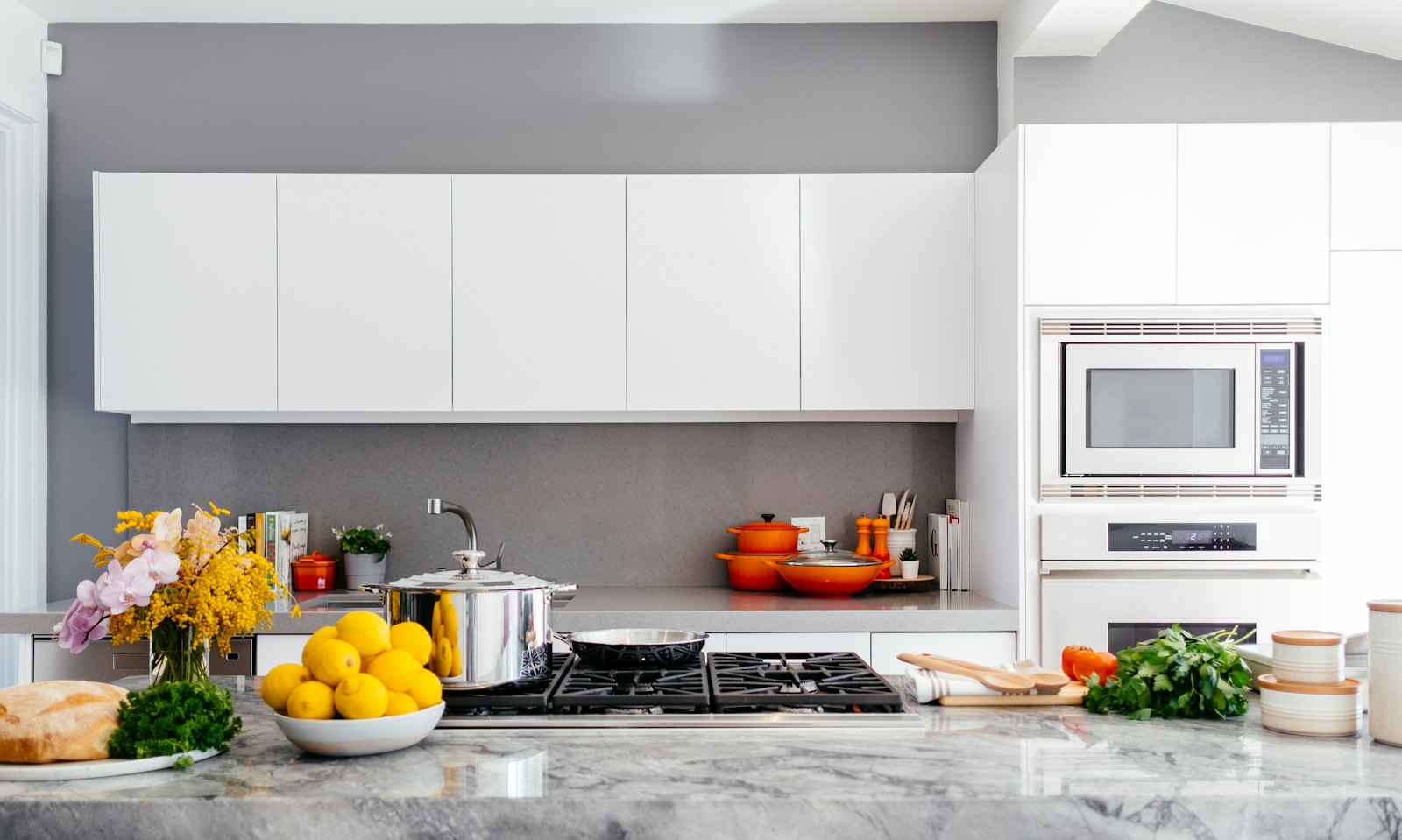
Matte black slab cabinets in a contemporary Philadelphia loft. The absence of visible hardware and frame details creates a seamless architectural statement.
Defining the Slab Aesthetic
Unlike traditional five-piece cabinet doors, slab cabinets consist of a single, flat piece of material. This elemental simplicity creates a visual quiet that allows other kitchen elements—premium countertops, architectural lighting, or statement appliances—to command attention.
Anatomy of Flat Panel Construction
The construction is elegantly simple:
Key Construction Elements
- Single-piece door: No frames, rails, or stiles—just one continuous surface
- Edge detailing: Options range from razor-sharp 90-degree edges to subtle bevels or radius profiles
- Integrated handles: J-pulls, C-channels, or true handle-less push-to-open mechanisms
- Full overlay: Doors typically cover the entire cabinet box face, eliminating visible frames
This construction method produces a monolithic appearance that reads as architectural millwork rather than applied cabinetry—particularly effective in minimalist and contemporary interiors.
Slab vs. Shaker: Choosing Your Design Language
While Shaker cabinets bridge traditional and transitional styles, slab cabinets commit fully to modernism. Understanding this distinction helps prevent design discord in your renovation.
Slab Cabinets
Contemporary minimalism for urban sophistication
- Clean, uninterrupted planes
- Ideal for handle-less designs
- Complements quartz, concrete, and steel
- Suits modern and contemporary homes
- Popular in Center City Philadelphia condos
Shaker Cabinets
Transitional versatility with historical reference
- Recessed panel with visible frame
- Traditional hardware requirements
- Pairs with granite, marble, and wood
- Spans traditional to transitional styles
- Dominant in Main Line and Bucks County
The Handle-less Revolution
Perhaps no element defines modern slab cabinetry more than the absence of traditional hardware. Three primary approaches dominate the tri-state market:
Integrated Pulls (J-Pull)
A precision-milled channel along the door's top edge creates a shadow gap for fingers. This approach maintains the visual purity of the flat surface while providing ergonomic functionality. Particularly popular in Montgomery County's contemporary new construction, J-pulls offer the handle-less aesthetic without the premium cost of push-to-open mechanisms.
True Handle-less (Push-to-Open)
Magnetic or mechanical touch-latches allow doors to open with a gentle press. This represents the ultimate minimalist expression—nothing interrupts the cabinet's planar surface. However, the hardware's durability becomes critical; we specify Blum or Hettich mechanisms for Philadelphia and DC area installations where daily use demands commercial-grade reliability.
Minimalist Bar Handles
For those seeking compromise, linear bar handles in brushed nickel or matte black provide functional grip while maintaining horizontal emphasis. In Jersey Shore vacation homes, this approach offers practicality for renters while preserving modern aesthetics.

True handle-less slab cabinetry with integrated LED lighting. The continuous white surface reflects natural light, expanding the visual space in urban apartments.
Material Innovations in Flat Panel
The absence of frame construction places increased importance on material selection. Without the structural forgiveness of stiles and rails, slab door materials must resist warping, sagging, and dimensional change. While the door construction appears visually simple, the engineering required for warp-resistant flat panels often exceeds that of traditional framed doors, making material quality crucial for longevity.
Regional Design Trends: PA, NJ & MD
The adoption of slab cabinetry varies significantly across the tri-state region, reflecting distinct architectural contexts.
Philadelphia Center City & Northern Liberties
In converted warehouses and new luxury high-rises, slab cabinets in matte black or concrete finishes dominate. The aesthetic complements exposed brick and ductwork while providing the refined counterpoint that prevents industrial spaces from feeling unfinished.
Bethesda & Chevy Chase, MD
Contemporary new construction in Montgomery County favors white or greige slab cabinets with J-pull profiles. This approach satisfies modern tastes while maintaining the neutral palette that appeals to the area's resale-conscious buyers.
Jersey Shore Second Homes
Beachfront properties in Avalon and Stone Harbor increasingly specify slab cabinetry in marine-grade acrylics. The seamless surfaces resist salt air corrosion and clean easily after sandy-footed traffic—practical luxury for coastal living.
🔥 2025 Color Trends for Slab Cabinets
Philadelphia favorite
Bethesda modern
Jersey Shore chic
Countertop Pairing Strategies
The simplicity of slab cabinets demands thoughtful countertop selection. Without cabinet detail to provide visual interest, the counter becomes the primary texture in the kitchen.
Waterfall Islands: Slab cabinets particularly excel when paired with waterfall countertop edges, where the stone appears to cascade down the cabinet sides. This monolithic treatment suits the architectural honesty of flat panel doors—popular in Arlington's contemporary condos where the island serves as sculpture.
Contrast Strategies: Dark slab cabinets (charcoal or navy) paired with Calacatta quartz create high-impact contrast that defines modern luxury. Conversely, white slab cabinets with concrete-finish quartz offer subtle tonal variation perfect for Princeton's understated elegant homes.
Installation Nuances
Slab cabinets demand precision. Without face frames to forgive minor wall irregularities, installation requires laser-level accuracy. In Philadelphia's historic row houses, where walls may vary 1-2 inches over a kitchen run, extensive prep work (shimming, furring, or skim coating) becomes essential before slab cabinet installation.
Similarly, the handle-less hardware systems require exacting alignment. A J-pull channel that's even slightly off-center disrupts the visual rhythm that makes slab cabinetry compelling. We recommend experienced installers familiar with European hardware systems for optimal results.
Conclusion: The Architectural Choice
Slab cabinets represent more than a stylistic preference—they signal a philosophical commitment to architectural purity. For homeowners in Pennsylvania, New Jersey, and Maryland renovating contemporary spaces, flat panel cabinetry provides the visual silence that allows material quality and spatial flow to dominate.
Whether specifying matte black lacquer for a Philadelphia loft or warm walnut veneer for a Bethesda modern, the key lies in embracing restraint. In slab cabinetry, every detail becomes magnified; perfection in installation and material selection separates sophisticated minimalism from cheap modernism.
As open-concept living continues to dominate tri-state residential architecture, slab cabinets offer the uninterrupted visual planes that make kitchens feel less like utility spaces and more like integrated architectural elements.
Experience Modern Cabinetry
Visit our showrooms to operate handle-less mechanisms and compare matte lacquer finishes. Our Rockville and Cherry Hill locations feature full slab kitchen displays with integrated appliance solutions.
Schedule a Design Consultation →Slab Cabinets: The Rise of Flat Panel Minimalism
Why handle-less, seamless cabinetry is dominating contemporary kitchen design in Philadelphia, Bethesda, and Cherry Hill
Slab cabinets—also known as flat panel cabinets—represent the purest expression of modern kitchen design. Stripped of frames, moldings, and ornamental details, these cabinets present a continuous, uninterrupted surface that embodies contemporary architecture's mantra: less is more.
For homeowners in urban centers like Philadelphia's Center City, Bethesda's high-rise condos, and Cherry Hill's modern developments, slab cabinetry offers the sleek, architectural aesthetic that complements open-concept living and clean-lined interiors.
Matte black slab cabinets in a contemporary Philadelphia loft. The absence of visible hardware and frame details creates a seamless architectural statement.
Defining the Slab Aesthetic
Unlike traditional five-piece cabinet doors, slab cabinets consist of a single, flat piece of material. This elemental simplicity creates a visual quiet that allows other kitchen elements—premium countertops, architectural lighting, or statement appliances—to command attention.
Anatomy of Flat Panel Construction
The construction is elegantly simple:
Key Construction Elements
- Single-piece door: No frames, rails, or stiles—just one continuous surface
- Edge detailing: Options range from razor-sharp 90-degree edges to subtle bevels or radius profiles
- Integrated handles: J-pulls, C-channels, or true handle-less push-to-open mechanisms
- Full overlay: Doors typically cover the entire cabinet box face, eliminating visible frames
This construction method produces a monolithic appearance that reads as architectural millwork rather than applied cabinetry—particularly effective in minimalist and contemporary interiors.
Slab vs. Shaker: Choosing Your Design Language
While Shaker cabinets bridge traditional and transitional styles, slab cabinets commit fully to modernism. Understanding this distinction helps prevent design discord in your renovation.
Slab Cabinets
Contemporary minimalism for urban sophistication
- Clean, uninterrupted planes
- Ideal for handle-less designs
- Complements quartz, concrete, and steel
- Suits modern and contemporary homes
- Popular in Center City Philadelphia condos
Shaker Cabinets
Transitional versatility with historical reference
- Recessed panel with visible frame
- Traditional hardware requirements
- Pairs with granite, marble, and wood
- Spans traditional to transitional styles
- Dominant in Main Line and Bucks County
The Handle-less Revolution
Perhaps no element defines modern slab cabinetry more than the absence of traditional hardware. Three primary approaches dominate the tri-state market:
Integrated Pulls (J-Pull)
A precision-milled channel along the door's top edge creates a shadow gap for fingers. This approach maintains the visual purity of the flat surface while providing ergonomic functionality. Particularly popular in Montgomery County's contemporary new construction, J-pulls offer the handle-less aesthetic without the premium cost of push-to-open mechanisms.
True Handle-less (Push-to-Open)
Magnetic or mechanical touch-latches allow doors to open with a gentle press. This represents the ultimate minimalist expression—nothing interrupts the cabinet's planar surface. However, the hardware's durability becomes critical; we specify Blum or Hettich mechanisms for Philadelphia and DC area installations where daily use demands commercial-grade reliability.
Minimalist Bar Handles
For those seeking compromise, linear bar handles in brushed nickel or matte black provide functional grip while maintaining horizontal emphasis. In Jersey Shore vacation homes, this approach offers practicality for renters while preserving modern aesthetics.
True handle-less slab cabinetry with integrated LED lighting. The continuous white surface reflects natural light, expanding the visual space in urban apartments.
Material Innovations in Flat Panel
The absence of frame construction places increased importance on material selection. Without the structural forgiveness of stiles and rails, slab door materials must resist warping, sagging, and dimensional change. While the door construction appears visually simple, the engineering required for warp-resistant flat panels often exceeds that of traditional framed doors, making material quality crucial for longevity.
Regional Design Trends: PA, NJ & MD
The adoption of slab cabinetry varies significantly across the tri-state region, reflecting distinct architectural contexts.
Philadelphia Center City & Northern Liberties
In converted warehouses and new luxury high-rises, slab cabinets in matte black or concrete finishes dominate. The aesthetic complements exposed brick and ductwork while providing the refined counterpoint that prevents industrial spaces from feeling unfinished.
Bethesda & Chevy Chase, MD
Contemporary new construction in Montgomery County favors white or greige slab cabinets with J-pull profiles. This approach satisfies modern tastes while maintaining the neutral palette that appeals to the area's resale-conscious buyers.
Jersey Shore Second Homes
Beachfront properties in Avalon and Stone Harbor increasingly specify slab cabinetry in marine-grade acrylics. The seamless surfaces resist salt air corrosion and clean easily after sandy-footed traffic—practical luxury for coastal living.
🔥 2025 Color Trends for Slab Cabinets
Philadelphia favorite
Bethesda modern
Jersey Shore chic
Countertop Pairing Strategies
The simplicity of slab cabinets demands thoughtful countertop selection. Without cabinet detail to provide visual interest, the counter becomes the primary texture in the kitchen.
Waterfall Islands: Slab cabinets particularly excel when paired with waterfall countertop edges, where the stone appears to cascade down the cabinet sides. This monolithic treatment suits the architectural honesty of flat panel doors—popular in Arlington's contemporary condos where the island serves as sculpture.
Contrast Strategies: Dark slab cabinets (charcoal or navy) paired with Calacatta quartz create high-impact contrast that defines modern luxury. Conversely, white slab cabinets with concrete-finish quartz offer subtle tonal variation perfect for Princeton's understated elegant homes.
Installation Nuances
Slab cabinets demand precision. Without face frames to forgive minor wall irregularities, installation requires laser-level accuracy. In Philadelphia's historic row houses, where walls may vary 1-2 inches over a kitchen run, extensive prep work (shimming, furring, or skim coating) becomes essential before slab cabinet installation.
Similarly, the handle-less hardware systems require exacting alignment. A J-pull channel that's even slightly off-center disrupts the visual rhythm that makes slab cabinetry compelling. We recommend experienced installers familiar with European hardware systems for optimal results.
Conclusion: The Architectural Choice
Slab cabinets represent more than a stylistic preference—they signal a philosophical commitment to architectural purity. For homeowners in Pennsylvania, New Jersey, and Maryland renovating contemporary spaces, flat panel cabinetry provides the visual silence that allows material quality and spatial flow to dominate.
Whether specifying matte black lacquer for a Philadelphia loft or warm walnut veneer for a Bethesda modern, the key lies in embracing restraint. In slab cabinetry, every detail becomes magnified; perfection in installation and material selection separates sophisticated minimalism from cheap modernism.
As open-concept living continues to dominate tri-state residential architecture, slab cabinets offer the uninterrupted visual planes that make kitchens feel less like utility spaces and more like integrated architectural elements.
Experience Modern Cabinetry
Visit our showrooms to operate handle-less mechanisms and compare matte lacquer finishes. Our Rockville and Cherry Hill locations feature full slab kitchen displays with integrated appliance solutions.
Schedule a Design Consultation →