Shaker Cabinets: The Timeless Choice for Modern Kitchens
Why this 19th-century design remains the gold standard for contemporary homes in Pennsylvania, New Jersey, and Maryland
Shaker cabinets have dominated kitchen design for over two centuries—and for good reason. Characterized by their clean lines, unadorned surfaces, and functional beauty, Shaker-style cabinetry offers a rare combination: historical authenticity that feels utterly contemporary.
For homeowners in the tri-state area—from Philadelphia's historic row houses to Rockville's modern suburbs—Shaker cabinets provide the architectural versatility needed to honor regional heritage while embracing modern functionality.
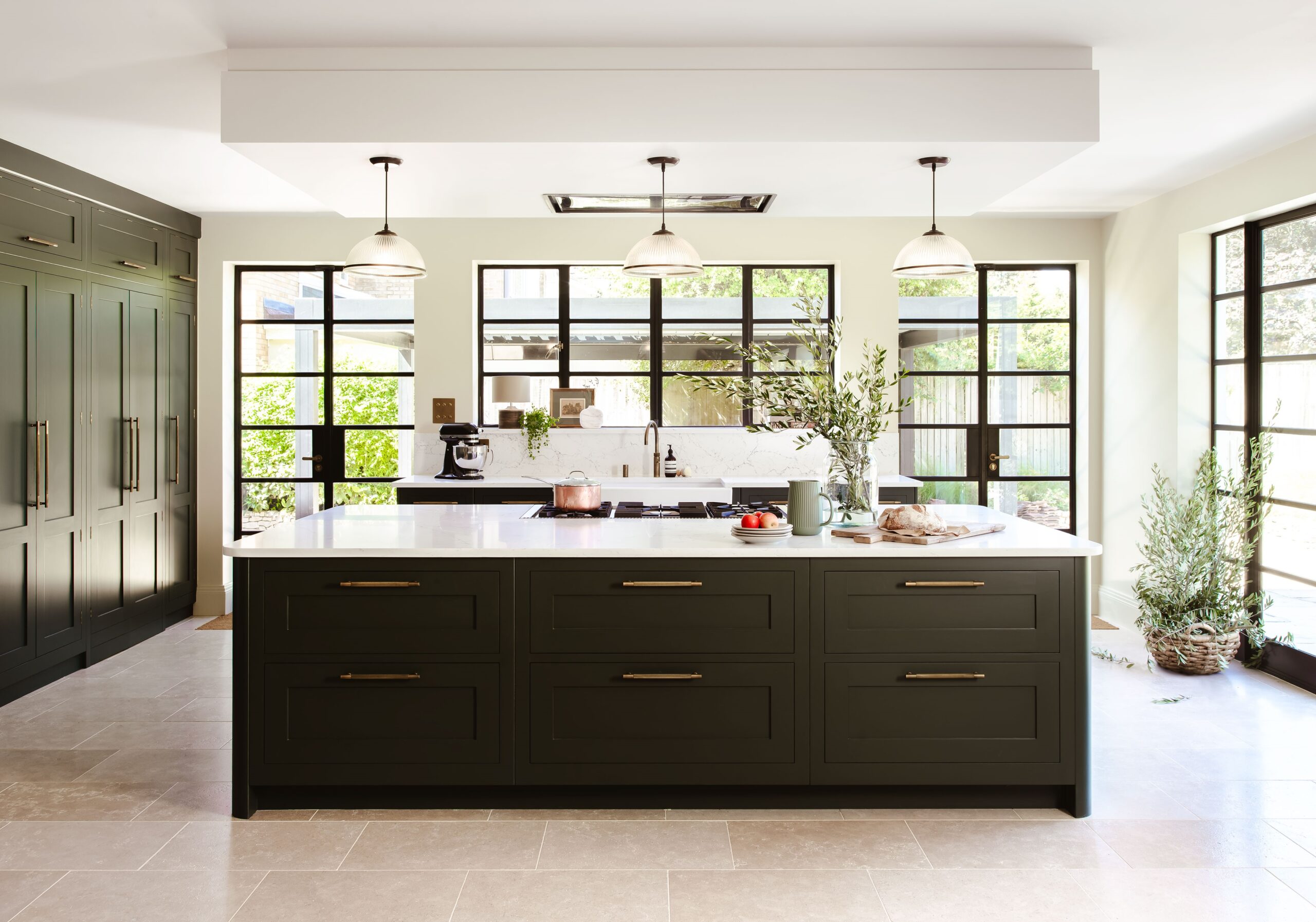
Modern interpretation of Shaker style featuring clean lines and minimalist hardware. The recessed panel construction creates subtle shadow lines that add depth without ornamentation.
What Defines a Shaker Cabinet?
The Shaker design philosophy centers on the concept of beauty through utility. Originally crafted by the Shaker religious communities in the 19th century, these cabinets eschewed decorative moldings in favor of pure, functional form.
The Anatomy of Shaker Doors
A true Shaker cabinet door consists of five distinct pieces:
The Five-Piece Construction
- Two vertical stiles (side frames) that provide structural integrity
- Two horizontal rails (top and bottom frames) that complete the frame
- One recessed center panel that sits slightly behind the frame, creating the signature shadow line
This construction creates a reveal—the visible step between the frame and panel—that catches light differently throughout the day, adding subtle dimension to your kitchen without visual clutter.
Why Shaker Cabinets Suit Tri-State Architecture
The architectural diversity of Pennsylvania, New Jersey, and Maryland demands cabinetry that can bridge historical and contemporary aesthetics. Shaker cabinets excel in this transitional role.
In Pennsylvania Historic Homes
Philadelphia's Federal-style row houses and Main Line estates often feature original millwork with restrained classical details. Shaker cabinets complement these interiors by echoing the period-appropriate emphasis on proportion over ornamentation.
In New Jersey Suburbia
From Cherry Hill's colonial revivals to Princeton's craftsman bungalows, Shaker cabinetry provides the neutral foundation needed for open-concept living spaces that flow between kitchen, dining, and family areas.
In Maryland Contemporary Spaces
Rockville and Bethesda's modern new construction benefits from Shaker's geometric purity. When paired with slab or waterfall countertops, the recessed panels create just enough visual interest to prevent a sterile appearance.
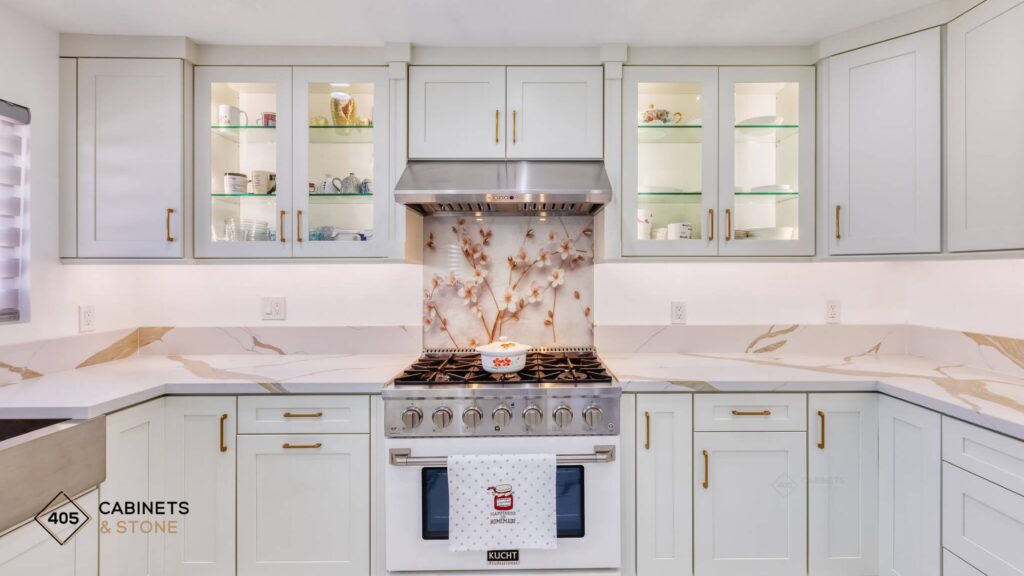
White Shaker cabinets with traditional stile-and-rail construction. Note the proportional balance between frame width and panel recession—a hallmark of quality craftsmanship.
Material Matters: Construction Quality
Not all Shaker cabinets are created equal. The material composition affects both aesthetics and longevity, particularly important in the humid summers and variable winters of the Mid-Atlantic region.
Solid Wood vs. Engineered Materials
Hardwood frames (typically maple, cherry, or oak) provide the structural stability needed for decades of use. The center panel, however, requires careful consideration:
- MDF (Medium-Density Fiberboard) panels offer superior paint adhesion and resistance to expansion/contraction—ideal for painted finishes in humid climates
- Solid wood panels provide authentic grain continuity for stained finishes but require careful climate control
- Veneered plywood offers a middle ground, providing dimensional stability with wood grain aesthetics
At NEARME, we typically recommend MDF panels for painted Shaker cabinets in tri-state kitchens, as they resist the cracking and seam separation that can occur with seasonal humidity fluctuations common to Maryland and New Jersey.
Color Palettes: Beyond Basic White
While white Shaker cabinets remain perennially popular—accounting for nearly 60% of installations according to industry data—the style's simplicity makes it an ideal canvas for color expression.
Navy blue Shaker cabinets have seen a 40% increase in popularity across New Jersey and Pennsylvania installations over the past two years. The deep color emphasizes the recessed panel shadow lines, adding architectural interest that reads as custom millwork rather than standard cabinetry.
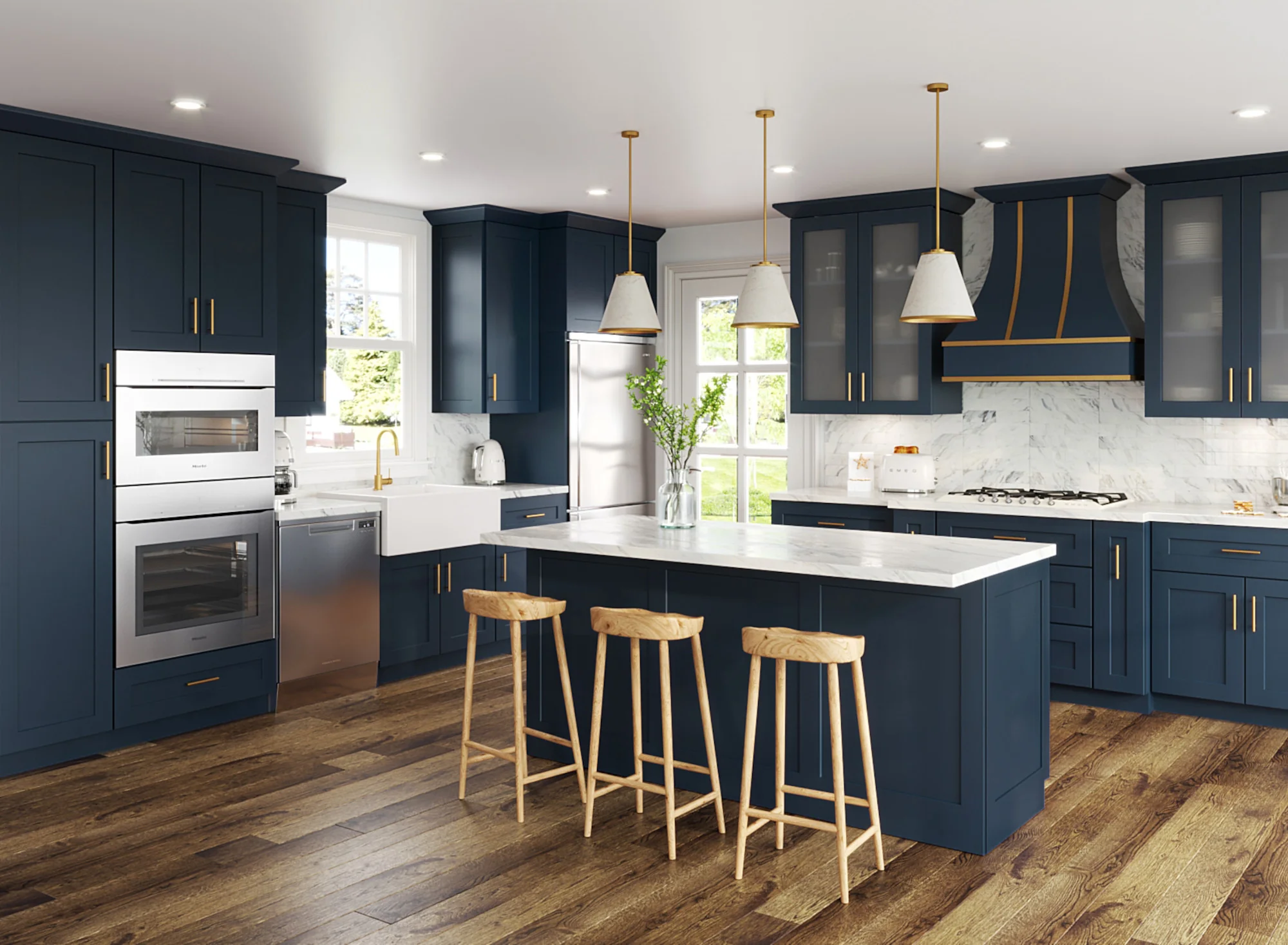
Navy Shaker cabinetry demonstrates how color can transform the simple five-piece door into a dramatic design statement. The recessed panels create subtle light play across the surface.
Hardware Selection: The Jewelry Effect
Shaker cabinets provide the ideal backdrop for hardware expression. The flat center panel offers uninterrupted space for pulls and knobs, while the frame provides visual boundaries that help determine appropriate hardware scale.
Proportion Guidelines
For standard Shaker doors (featuring 2.5-inch to 3-inch frames):
Hardware Sizing Rules
- Drawer pulls: Approximately 1/3 the width of the drawer front
- Door handles: 5 to 7 inches in length maintains proportional balance
- Knobs: 1.25 to 1.5 inches in diameter prevent visual heaviness on narrow stiles
Brushed brass and matte black finishes currently dominate tri-state installations, with brass offering warmth that complements the cream tones popular in Bucks County farmhouses, and black providing contrast for the cool grays favored in Arlington contemporary homes.
Countertop Pairing Strategies
The simplicity of Shaker cabinets places increased importance on countertop selection. Without decorative cabinet details to draw the eye, the counter surface becomes the primary visual texture in the kitchen.
Quartz Combinations
Engineered quartz offers the durability needed for busy family kitchens while providing the consistent patterning that complements Shaker geometry:
- White Shaker + Calacatta Quartz: Classic luxury suitable for formal Main Line homes
- Navy Shaker + White Quartz: Nautical crispness perfect for Shore homes
- Greige Shaker + Concrete-Finish Quartz: Industrial warmth for Philadelphia loft conversions
Investment Value: Why Shaker Endures
From a real estate perspective, Shaker cabinets offer exceptional return on investment. Their widespread appeal means they neither alienate traditional buyers (as ultra-modern slab cabinets might) nor appear dated to contemporary tastes (as raised-panel traditional styles can).
According to regional market analysis, kitchens featuring quality Shaker cabinetry in neutral tones consistently recoup 70-80% of renovation costs at resale in the Pennsylvania and New Jersey markets—among the highest returns for interior improvements.
Conclusion: The Art of Restraint
The enduring popularity of Shaker cabinets speaks to a universal design truth: restraint requires more discipline than ornamentation. The precise proportions, the quality of materials, the exactness of joinery—these subtleties become apparent when decoration is removed from the equation.
For homeowners in Pennsylvania, New Jersey, and Maryland contemplating kitchen renovation, Shaker cabinets offer not just a safe choice, but a sophisticated one. They provide the architectural permanence of historical design while accommodating the open, connected lifestyles of contemporary family living.
Whether you're renovating a 19th-century Philadelphia brownstone or building new in Rockville, the Shaker philosophy—beauty through utility—remains as relevant today as when it was first practiced two centuries ago.
Ready to Explore Shaker Cabinetry?
Visit our showrooms in Rockville, MD or Cherry Hill, NJ to see premium Shaker construction in person. Our design team can walk you through wood species, finish options, and hardware pairings tailored to your home's architecture.
Schedule a Consultation →Shaker Cabinets: The Timeless Choice for Modern Kitchens
Why this 19th-century design remains the gold standard for contemporary homes in Pennsylvania, New Jersey, and Maryland
Shaker cabinets have dominated kitchen design for over two centuries—and for good reason. Characterized by their clean lines, unadorned surfaces, and functional beauty, Shaker-style cabinetry offers a rare combination: historical authenticity that feels utterly contemporary.
For homeowners in the tri-state area—from Philadelphia's historic row houses to Rockville's modern suburbs—Shaker cabinets provide the architectural versatility needed to honor regional heritage while embracing modern functionality.
Modern interpretation of Shaker style featuring clean lines and minimalist hardware. The recessed panel construction creates subtle shadow lines that add depth without ornamentation.
What Defines a Shaker Cabinet?
The Shaker design philosophy centers on the concept of beauty through utility. Originally crafted by the Shaker religious communities in the 19th century, these cabinets eschewed decorative moldings in favor of pure, functional form.
The Anatomy of Shaker Doors
A true Shaker cabinet door consists of five distinct pieces:
The Five-Piece Construction
- Two vertical stiles (side frames) that provide structural integrity
- Two horizontal rails (top and bottom frames) that complete the frame
- One recessed center panel that sits slightly behind the frame, creating the signature shadow line
This construction creates a reveal—the visible step between the frame and panel—that catches light differently throughout the day, adding subtle dimension to your kitchen without visual clutter.
Why Shaker Cabinets Suit Tri-State Architecture
The architectural diversity of Pennsylvania, New Jersey, and Maryland demands cabinetry that can bridge historical and contemporary aesthetics. Shaker cabinets excel in this transitional role.
In Pennsylvania Historic Homes
Philadelphia's Federal-style row houses and Main Line estates often feature original millwork with restrained classical details. Shaker cabinets complement these interiors by echoing the period-appropriate emphasis on proportion over ornamentation.
In New Jersey Suburbia
From Cherry Hill's colonial revivals to Princeton's craftsman bungalows, Shaker cabinetry provides the neutral foundation needed for open-concept living spaces that flow between kitchen, dining, and family areas.
In Maryland Contemporary Spaces
Rockville and Bethesda's modern new construction benefits from Shaker's geometric purity. When paired with slab or waterfall countertops, the recessed panels create just enough visual interest to prevent a sterile appearance.
White Shaker cabinets with traditional stile-and-rail construction. Note the proportional balance between frame width and panel recession—a hallmark of quality craftsmanship.
Material Matters: Construction Quality
Not all Shaker cabinets are created equal. The material composition affects both aesthetics and longevity, particularly important in the humid summers and variable winters of the Mid-Atlantic region.
Solid Wood vs. Engineered Materials
Hardwood frames (typically maple, cherry, or oak) provide the structural stability needed for decades of use. The center panel, however, requires careful consideration:
- MDF (Medium-Density Fiberboard) panels offer superior paint adhesion and resistance to expansion/contraction—ideal for painted finishes in humid climates
- Solid wood panels provide authentic grain continuity for stained finishes but require careful climate control
- Veneered plywood offers a middle ground, providing dimensional stability with wood grain aesthetics
At NEARME, we typically recommend MDF panels for painted Shaker cabinets in tri-state kitchens, as they resist the cracking and seam separation that can occur with seasonal humidity fluctuations common to Maryland and New Jersey.
Color Palettes: Beyond Basic White
While white Shaker cabinets remain perennially popular—accounting for nearly 60% of installations according to industry data—the style's simplicity makes it an ideal canvas for color expression.
Navy blue Shaker cabinets have seen a 40% increase in popularity across New Jersey and Pennsylvania installations over the past two years. The deep color emphasizes the recessed panel shadow lines, adding architectural interest that reads as custom millwork rather than standard cabinetry.
Navy Shaker cabinetry demonstrates how color can transform the simple five-piece door into a dramatic design statement. The recessed panels create subtle light play across the surface.
Hardware Selection: The Jewelry Effect
Shaker cabinets provide the ideal backdrop for hardware expression. The flat center panel offers uninterrupted space for pulls and knobs, while the frame provides visual boundaries that help determine appropriate hardware scale.
Proportion Guidelines
For standard Shaker doors (featuring 2.5-inch to 3-inch frames):
Hardware Sizing Rules
- Drawer pulls: Approximately 1/3 the width of the drawer front
- Door handles: 5 to 7 inches in length maintains proportional balance
- Knobs: 1.25 to 1.5 inches in diameter prevent visual heaviness on narrow stiles
Brushed brass and matte black finishes currently dominate tri-state installations, with brass offering warmth that complements the cream tones popular in Bucks County farmhouses, and black providing contrast for the cool grays favored in Arlington contemporary homes.
Countertop Pairing Strategies
The simplicity of Shaker cabinets places increased importance on countertop selection. Without decorative cabinet details to draw the eye, the counter surface becomes the primary visual texture in the kitchen.
Quartz Combinations
Engineered quartz offers the durability needed for busy family kitchens while providing the consistent patterning that complements Shaker geometry:
- White Shaker + Calacatta Quartz: Classic luxury suitable for formal Main Line homes
- Navy Shaker + White Quartz: Nautical crispness perfect for Shore homes
- Greige Shaker + Concrete-Finish Quartz: Industrial warmth for Philadelphia loft conversions
Investment Value: Why Shaker Endures
From a real estate perspective, Shaker cabinets offer exceptional return on investment. Their widespread appeal means they neither alienate traditional buyers (as ultra-modern slab cabinets might) nor appear dated to contemporary tastes (as raised-panel traditional styles can).
According to regional market analysis, kitchens featuring quality Shaker cabinetry in neutral tones consistently recoup 70-80% of renovation costs at resale in the Pennsylvania and New Jersey markets—among the highest returns for interior improvements.
Conclusion: The Art of Restraint
The enduring popularity of Shaker cabinets speaks to a universal design truth: restraint requires more discipline than ornamentation. The precise proportions, the quality of materials, the exactness of joinery—these subtleties become apparent when decoration is removed from the equation.
For homeowners in Pennsylvania, New Jersey, and Maryland contemplating kitchen renovation, Shaker cabinets offer not just a safe choice, but a sophisticated one. They provide the architectural permanence of historical design while accommodating the open, connected lifestyles of contemporary family living.
Whether you're renovating a 19th-century Philadelphia brownstone or building new in Rockville, the Shaker philosophy—beauty through utility—remains as relevant today as when it was first practiced two centuries ago.
Ready to Explore Shaker Cabinetry?
Visit our showrooms in Rockville, MD or Cherry Hill, NJ to see premium Shaker construction in person. Our design team can walk you through wood species, finish options, and hardware pairings tailored to your home's architecture.
Schedule a Consultation →